Sunday, 17 February 2019

The Body as Action and Transgression


Project 1: The Body as Action and Transgression

The Body in Contemporary Art is an overwhelming, vast collection of ideas. It has been derived from many different opposing positions, which have developed over the centuries from many different competing branches of knowledge and institutional frameworks. To think about The Body is to also involve one’s mind, since to make art one requires a body and a consciousness to act. If we assume the ‘mind to be the seat of intellect, then the body is our interface with the world and our senses its line of communication1. The body’s mind is also inextricably linked to such terms as subjectivity, identity or even the self, since it is these historical constructs which define our understanding of consciousness and the ways in which these institutions have shaped and influenced, who we are today.

In order to frame these vast arrays of information, an arbitrary list of parameters have been drawn up for you to research and for you to even add to in your own time, in and out of the studio. The way I have framed this semester lectures is to simply treat The Body in Contemporary Art as the over-arching term used to describe how artists and their use of representation (language), engage with the topics presented over the course of the semester.

These topics have been broken down into six main areas, although through your own research many more may be uncovered. These are The Body as Absence and Presence, The Body as Text, The Body as Action and Transgression, The Body as Spiritual and Immaterial, The Body in TimeSpace and Sound, and lastly, The Body as Trace.

The Body as Text


Project 1: The Body as Text

The Body in Contemporary Art is an overwhelming, vast collection of ideas. It has been derived from many different opposing positions, which have developed over the centuries from many different competing branches of knowledge and institutional frameworks. To think about The Body is to also involve one’s mind, since to make art one requires a body and a consciousness to act. If we assume the ‘mind to be the seat of intellect, then the body is our interface with the world and our senses its line of communication1. The body’s mind is also inextricably linked to such terms as subjectivity, identity or even the self, since it is these historical constructs which define our understanding of consciousness and the ways in which these institutions have shaped and influenced, who we are today.

In order to frame these vast arrays of information, an arbitrary list of parameters have been drawn up for you to research and for you to even add to in your own time, in and out of the studio. The way I have framed this semester lectures is to simply treat The Body in Contemporary Art as the over-arching term used to describe how artists and their use of representation (language), engage with the topics presented over the course of the semester.

These topics have been broken down into six main areas, although through your own research many more may be uncovered. These are The Body as Absence and Presence, The Body as Text, The Body as Action and Transgression, The Body as Spiritual and Immaterial, The Body in TimeSpace and Sound, and lastly, The Body as Trace.

The Body as Absence and Presence

The Body, Identity and The Self

Project 1: The Body as Absence and Presence

The Body in Contemporary Art is an overwhelming, vast collection of ideas. It has been derived from many different opposing positions, which have developed over the centuries from many different competing branches of knowledge and institutional frameworks. To think about The Body is to also involve one’s mind, since to make art one requires a body and a consciousness to act. If we assume the ‘mind to be the seat of intellect, then the body is our interface with the world and our senses its line of communication1. The body’s mind is also inextricably linked to such terms as subjectivity, identity or even the self, since it is these historical constructs which define our understanding of consciousness and the ways in which these institutions have shaped and influenced, who we are today.

In order to frame these vast arrays of information, an arbitrary list of parameters have been drawn up for you to research and for you to even add to in your own time, in and out of the studio. The way I have framed this semester lectures is to simply treat The Body in Contemporary Art as the over-arching term used to describe how artists and their use of representation (language), engage with the topics presented over the course of the semester.

These topics have been broken down into six main areas, although through your own research many more may be uncovered. These are The Body as Absence and Presence, The Body as Text, The Body as Action and Transgression, The Body as Spiritual and Immaterial, The Body in TimeSpace and Sound, and lastly, The Body as Trace.
fabrication and generation

 Fabrication and generation

Premise which is a conceptual and practical unravelling of the notion and practice of fabrication and its opposite principle ‘generation’. The course and your project will look at structural principles, organizing systems in nature and the critical analysis of contemporary fabrication and building systems, processes and use of materials. It is imperative that this project is process and material driven with an expectation that at the outset the goals are not clearly defined. This assignment is not a problem to be solved it is an enquiry in practical and conceptual terms.

Vision and Modernity: Machine and the Eye

Vision and Modernity: Machine and the Eye


With the increasing sway of digital intervention upon our graphic response to our surroundings, it could be suggested that the act of drawing is gradually being dissolved by digitally enhanced methodologies. The cultural impact of photography and a host of related image enhanced devices have historically relinquished the human eyesposition as the most sanctioned and perceptive mode for interpreting the visible world. Digital and technological advances are continuously altering the faith we place in our methods of personal graphic response and interpretation of the visible world.

BRIEF: In this exercise each student has the option of creating either a 2D drawing/collage, film, projection or 3D form that conveys a point of collision between the hand drawn and some form of scientific or digital intervention. The scientific reference may come from early historical drawing aids such as the camera obscura, the stereoscope, the slide projector or something as fundamental as the lens. Alternatively students can use a contemporary digital device that alters or reconfigures a series of nature-­‐based drawings as a means of exploring the relationships between science and nature.


A suggested approach could be tochoose a form from nature and complete a study or series of studies in any medium. These initial works could then be documented, photoshopped and reinterpreted in another medium. The point of ‘collision’ between the hand drawn and technology relies entirely upon student’s imaginative interpretation.


Mediums may include drawing, printmaking, rubbings, sculpture, film or ephemeral performance pieces etc. For the practicalities of thestudio-­‐based lesson it is advised that students keep their use of digital media to lap tops, mobile phones or other fundamental mechanisms.
The outcome for this project may be presented as a hybrid form of collage, drawings, assemblages, film or digital based works that establish and challenge new means of visual representation. Ultimately it is for each student to negotiate their own measure and degree of intervention between technology and their personal graphic response.

The Photographic Image: Memory and Place

The Photographic Image: Memory and Place

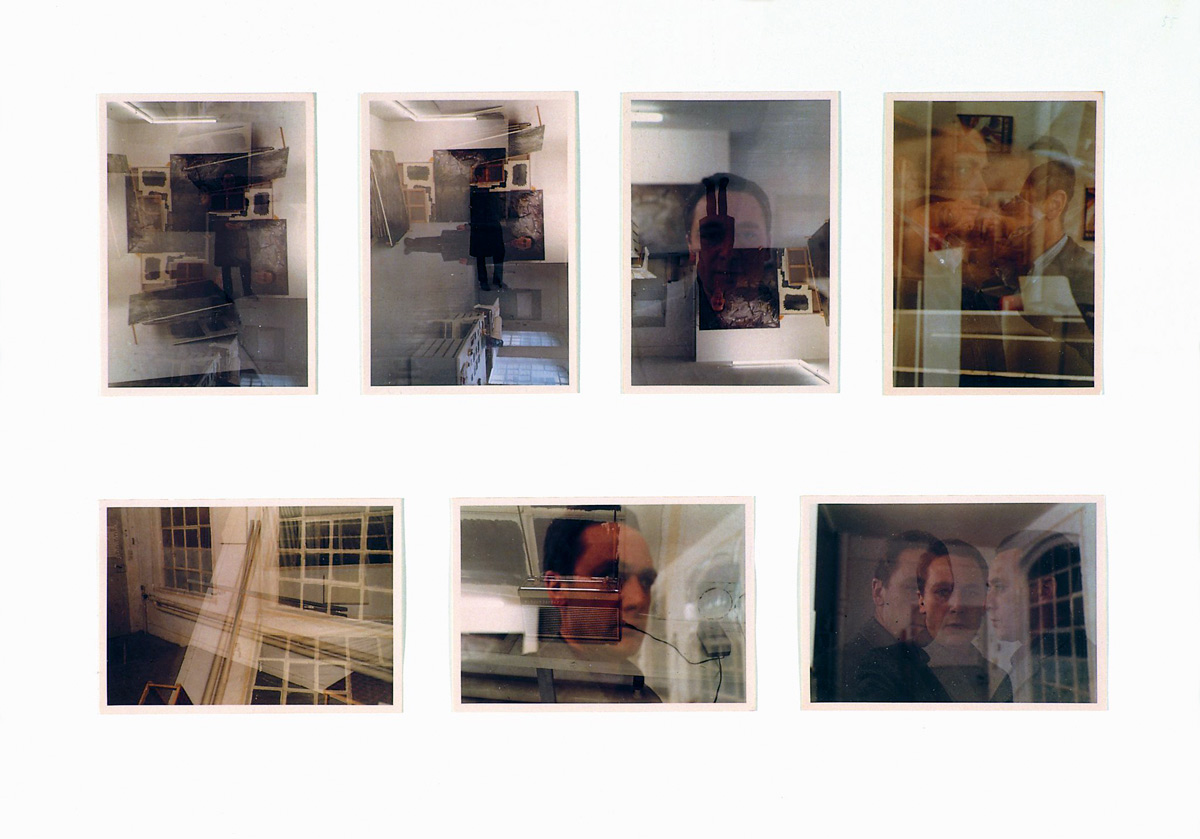
Gerhard Richter Atlas 2001 [detail]
[image source: https://artblart.files.wordpress.com/2012/04/gerhard_richter_atlas_tafel_58-web.jpg]


As an indexical anchor within contemporary visual culture the photograph continues to provide an effective form for exploring notions of memory and place. Providing confirmation of the immediacy of the moment the photograph is also capable of filling in the gaps in our mental picture of past and present, often making us feel that the world is more accessible than it really is. In providing assess to easy manipulation and alteration of the photographic image the digital agemay have fractured the photographs status as proof of evidence but regardless of concerns of authenticity there is no denying that the photograph maintains a powerful relationship between image and narrative.

BRIEF: For this lesson each student is to bring a combination of their own architectural interior and exterior photographs and any other images that relate a sense of connection to place or perhaps even displacement within a specific environment. You will need a minimum of 9 images. [the choice of scale is to be decided by each student] Multiple copies of your original photographic images may be required. Spend the session de-­‐constructing and reassembling those architectural spaces and related images into a single fabricated space or series of spaces.[the photocopier can provide an interesting start] In a similar fashion to the body-­‐portrait project the intervention of a graphic medium is to be engaged as a way of consolidating and reinforcingwhat it is you wish to convey. The degree of intervention of collage and any graphic mediumor filmic response will often be dictated by each student’s initial response to the de-­‐construction process.

An alternative approach to gathering your resource material is to collect found photographs of environments and discarded family snap shots that engage a more objective[detached] approach to the project. The postcard as a memento of place could also provide an interesting starting point.

The elements to be considered in this project relate to the photographic image as an index to notions of time, the present and the past, transitions of space etc.

-­‐the photograph as aide-­‐memoire [an aid to memory]

-­‐ the photograph as an authentic document in the digital age. -­‐the photograph as an archival resource.


-­‐the photograph as a harbinger of historical and personal narratives.

Sense of place:
connection to the now, this is the only time I have ever felt a connection to a geographical location

Assemblage - Narratives of Debris

Assemblage - Narratives of Debris

BRIEF: For this lesson students are to come prepared with a collection of gleaned
materials in order to create a bricolage/assemblage work. As a ‘narrative of debris’ the
final work may very well suggest a functional object or simply remain a self-contained
art piece. Each student is to develop his or her own conceptual considerations. A
suggested approach is for students to form a collaborative engagement with their
gleaned materials that allows the objects to suggest their own possible associations as
opposed to continually attempting to control the final outcome.
As a studio based project students need to be mindful of simple and creative methods of
binding surfaces and objects together. Basic materials such as string, thread and muslin combined with PVA glue can form effective joining and binding methods.

Play with the idea of :
Self limited potential
Hiding yourself
liminal space of personal transformation

Levi -Strauss presented his concept of bricolage in ‘The Savage Mind’ to emphasize the
creation of new meanings through the altering and adaptation of specific cultural
narratives. In the context of contemporary western society the bricoleur could be
considered as the odd-jobs person who keeps at hand all of the left over parts of every
gadget or machine they have tinkered with in order to create new inventions. The
bricoleur also represents a counterpart to the engineer who has a structured method
and all of the essential tools and materials to complete a specific project. In contrast the
bricoleur gleans discarded materials, using everyday objects as a method of delivering
new relationships between perception and experience. Within the realms of visual arts
practice the use of everyday objects allows for a surrendering of the artist’s traditional
ties to skill and control and therefore permitting the pre-existing associations of found
objects to complete the meaning of the work.